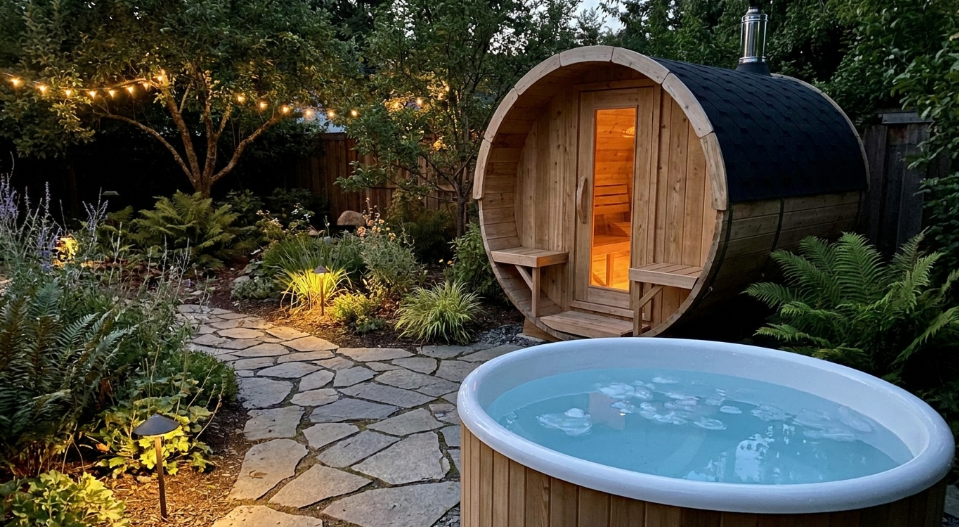
The features that matter most when buying a home sauna are heater wattage matched to cabin size, a wood species and build that will hold up to daily heat cycling, and a realistic sense of how often the household will actually use it, since usage frequency is what the research ties most consistently to health associations. Price and appearance are what most buyers compare first, but they matter less to long-term satisfaction than whether the unit is sized and powered correctly for consistent use.
Why Does Heater Sizing Matter More Than Almost Anything Else?
A heater sized to roughly 1 kilowatt per 45 to 50 cubic feet of cabin volume reaches and holds target temperature without running flat out constantly. An undersized heater, often chosen to save a few hundred dollars upfront, struggles to hit 150 to 195 degrees Fahrenheit on colder days, runs longer for the same result, and wears out faster from the extra strain. This is the single spec buyers most often get wrong, since sauna listings emphasize cabin size and wood species far more prominently than heater output relative to that size.
What Does the Research Say About Session Frequency?
A 2018 review in Mayo Clinic Proceedings summarized Finnish cohort data associating four to seven sessions a week with lower rates of cardiovascular events compared with once-weekly use, and a 2023 follow-up review in the same journal found the pattern held even after accounting for other lifestyle factors like exercise and diet. These are association findings from observational cohorts, not controlled trials proving causation, but they point toward a practical buying principle: a sauna that is inconvenient to use, whether because of a cold cabin, a broken door seal, or an inconvenient location in the yard, works against the exact usage pattern tied to the strongest associations.
What Wood and Build Quality Should a Buyer Check?
Western red cedar and Nordic spruce are the two most common interior woods, chosen for their low resin content and resistance to warping under repeated heat cycling. Panel thickness matters for insulation and how quickly the cabin reaches temperature; thinner panels heat faster but hold heat less efficiently once the heater cycles off. Door and window seals deserve a close look too, since a poorly sealed door is one of the most common reasons a otherwise well-built cabin runs hotter at the heater than it does on the bench.
Traditional Sauna or Infrared: Which Matches the Research?
Most of the cardiovascular and wellness research cited in reviews like the 2018 American Journal of Physiology paper on heat and cold effects is based on traditional Finnish-style sauna bathing at higher air temperatures, generally 150 to 195 degrees Fahrenheit. Infrared cabins run at a lower air temperature and heat the body more directly, which many users find more comfortable for longer sessions, but it is a different mechanism than the one most of the observational research describes. Neither is wrong to buy, but buyers specifically motivated by the published associations should know which model those studies actually used.
How Should Size Be Matched to Real Household Use?
A two-person cabin costs less, heats faster, and is easier to use consistently for a couple or solo user than a larger unit sized for guests who show up occasionally. A bigger sauna is not automatically the better buy: it takes longer to heat, costs more to run per session, and can end up underused if daily reality is one or two people rather than the four or five the listing photos suggest. Buyers comparing size options across the market, including SweatDecks’ lineup, generally do best measuring against how many people will realistically use it on a typical Tuesday, not the largest gathering it might host a few times a year.
Are Digital Controls and App Connectivity Worth Paying For?
A basic analog dial and timer handle the core job of setting and holding temperature, and plenty of long-running households are perfectly happy with one. Digital controls add precise temperature readouts, programmable start times so the cabin is preheated by the time someone gets home, and in some models an app that tracks session history. These add-ons typically raise the price by a few hundred dollars and don’t affect how the sauna performs against the health research discussed above, since studies measure session frequency and duration, not how the temperature was set. They’re a comfort and convenience upgrade, not a functional necessity, which is worth knowing before paying extra for a feature set that sounds more essential in marketing copy than it is in daily use.
What Warranty and Support Details Are Worth Checking?
Heater warranties typically run one to three years, and wood or structural warranties vary more widely by manufacturer. Beyond warranty length, check whether replacement parts, heater rocks, door seals, and heating elements are easy to source later, since a cabin with hard-to-find replacement parts becomes expensive to keep running once something wears out. This detail rarely shows up in marketing copy but matters more over five years of ownership than almost any spec on the box.
How Should Total Cost Factor Into the Decision?
A mid-size outdoor sauna, fully installed with a correctly sized heater and electrical work, typically runs $6,000 to $11,000 in 2026. The temptation is to compare sticker prices alone, but a cheaper cabin paired with an undersized heater can end up costing more over time in wasted electricity and an earlier heater replacement than a slightly pricier unit sized correctly from the start. Buyers who treat heater sizing and build quality as the priority, then compare price across models that meet those baselines, tend to end up happier with the purchase than buyers who shop by price first and check specs afterward.
Frequently Asked Questions
What heater wattage should a home sauna have? Roughly 1 kilowatt per 45 to 50 cubic feet of cabin space, letting it reach and hold 150 to 195 degrees without running constantly.
How many sessions a week are associated with the biggest health benefits in studies? Four or more a week shows the strongest cardiovascular associations in Finnish cohort research, compared with once-weekly use. This is an association, not a guarantee.
Does sauna type, traditional or infrared, matter for the benefits studies describe? Most of the strongest research covers traditional Finnish-style bathing at higher temperatures than infrared units reach. Infrared has its own appeal but is not the model most cited research is based on.
Is a bigger sauna always a better sauna? No. A larger cabin heats more slowly and costs more to run, and can sit underused if it does not match real household size.
References
- Cardiovascular and Other Health Benefits of Sauna Bathing: A Review of the Evidence, Mayo Clinic Proceedings, 2018
- Does the Combination of Finnish Sauna Bathing and Other Lifestyle Factors Confer Additional Health Benefits? A Review of the Evidence, Mayo Clinic Proceedings, 2023
- Effects of heat and cold on health, with special reference to Finnish sauna bathing, American Journal of Physiology, 2018
- Saunas and your health, Harvard Health Publishing